
A chieftain of the National Democratic Congress (NDC), Babachir Lawal, has urged former presidential candidates Peter Obi and Rabiu Kwankwaso to focus more on policy issues and concrete solutions to Nigeria’s challenges.
Lawal made the remarks on Arise TV’s Prime Time, anchored by Charles Anigolu, on Tuesday, while recounting his discussions with the two politicians.
He said he had observed that both Obi and Kwankwaso often attract large crowds at public appearances but, in his assessment, do not spend enough time explaining their policy agenda to Nigerians.
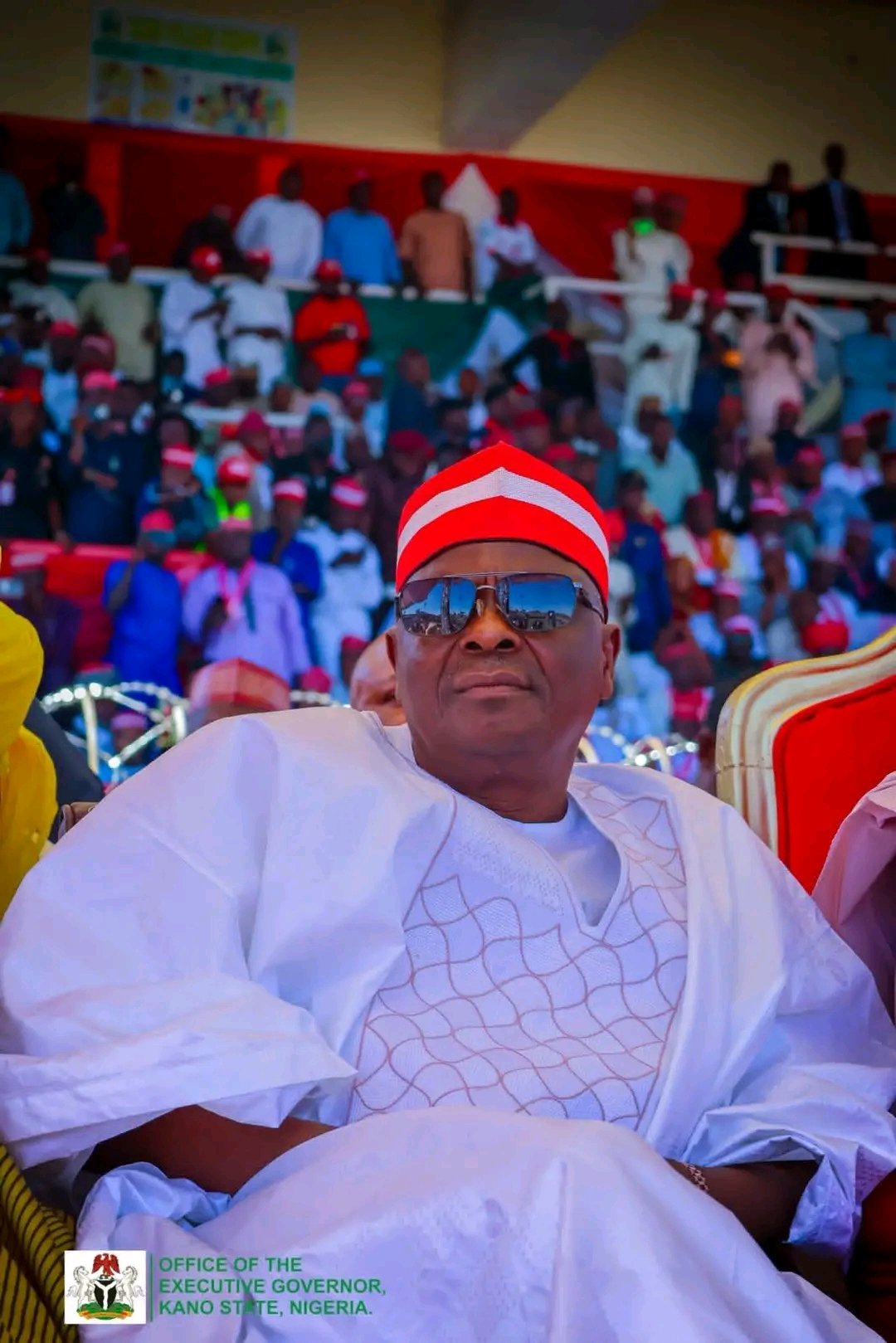
“I noticed that when they go to meet these their crowds, they don’t say much. Kwankwaso just gathers millions of red caps. They dance, they sing, he waves, and that’s the end. I don’t hear anything,” he said.
Speaking about Obi, Lawal said the former Anambra State governor also attracted significant attention during public appearances, particularly at religious and social gatherings.
“Then Peter Obi does the same thing. He goes to a funeral in a church and waits until the church is full, and then he walks in and disrupts everything, and even the pastor will start saying Obi, Obi. Only the corpse will still be quiet,” he said.
Lawal said his interactions with Obi and Kwankwaso convinced him that the politicians needed to communicate clearer programmes to address Nigeria’s economic and developmental challenges.
He said he specifically challenged Kwankwaso, whom he described as a water engineer, to make the rehabilitation of dams and irrigation infrastructure in northern Nigeria a priority.
According to him, many dams and irrigation canals that were functional when he was younger have become silted, while declining rainfall has made irrigation increasingly important to farmers.
“If one question you are a water engineer, all the dams in the North have silted. When we were young, people had their irrigation. Canals were all over Kano State. Now the dams are silted,” Lawal said.
He added that climate change and shorter periods of rainfall had made investment in irrigation essential.
“Our people need irrigation farming since rainfall is disappointing us. So we must focus on activating dams, wetting the canals, and so on,” he said.
Lawal also cited the stalled oil exploration project in Bauchi, claiming that the area has an estimated reserve of about one billion barrels of oil.
He argued that exploiting the resource and establishing a refinery in Bauchi or neighbouring Gombe State could reduce transportation costs and create economic opportunities in the region.
He further mentioned the proposed revival of the Mambilla hydroelectric project, saying the removal of legal impediments would enable the project to proceed.
According to Lawal, the project could generate about three gigawatts of electricity and support extensive irrigation and agricultural activities.
He said such proposals formed part of the policy discussions he had with politicians aligned with the ADC, adding that the opposition should present Nigerians with concrete programmes rather than merely campaign slogans.
Lawal also criticised the removal of the petrol subsidy, arguing that there were alternative approaches the government could have adopted.
“It’s not just about saying we remove subsidy on fuel. How do you remove subsidy? There are better ways of removing subsidy,” he said.
He said his support for the political platform was influenced by discussions around its proposed programmes, adding that he believed the opposition needed to demonstrate what it intended to do differently if elected.
Lawal said Nigerians should therefore expect political parties and their candidates to articulate specific policies capable of addressing infrastructure, energy, agriculture and economic challenges ahead of the 2027 elections.